


When you think about healthy eating, you might fall into the trap of viewing food on a single sliding scale: “bad” high-calorie foods on one side, and “good” low-calorie foods on the other. But nutrition isn't a straight line—it’s a multi-dimensional landscape. To truly fuel your body for high performance, you have to stop looking at just the calorie count and start looking at the bigger picture: the interplay between energy density, nutrient density, and your individual needs.
What do “energy-dense” and “nutrient-dense” mean?
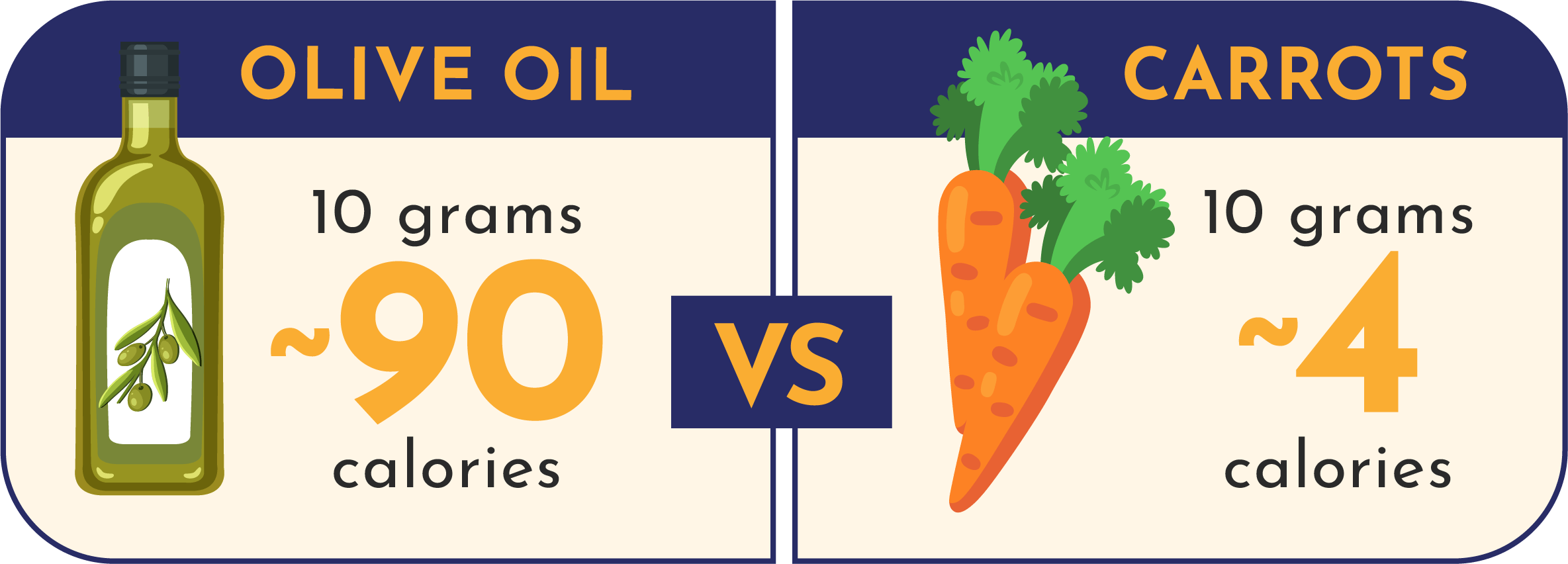
Foods high in calories are often called “energy-dense.” Energy-dense means the food provides a high number of calories per gram of food. For example, olive oil is energy-dense compared to carrots.
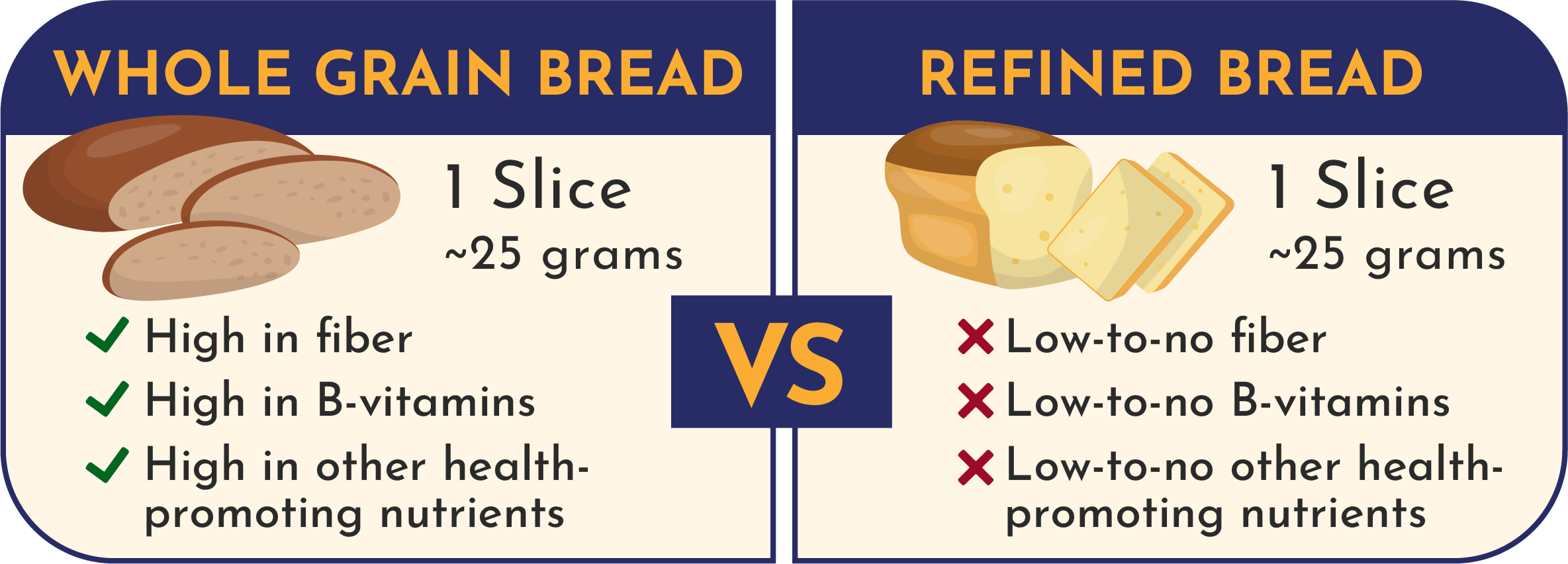
In contrast, “nutrient-dense” foods are high in health-promoting nutrients (vitamins and minerals) per gram. For example, the same amount of whole-grain bread is more nutrient-dense than refined (white) bread because refined grains typically have these natural nutrients removed during processing.
You may think energy- and nutrient-dense foods exist on a linear spectrum with high-calorie, low-nutrient foods on one end, and low-calorie, high-nutrient foods on the other. But energy- and nutrient-dense foods exist on a 2-dimensional plane with an x- and y-axis.
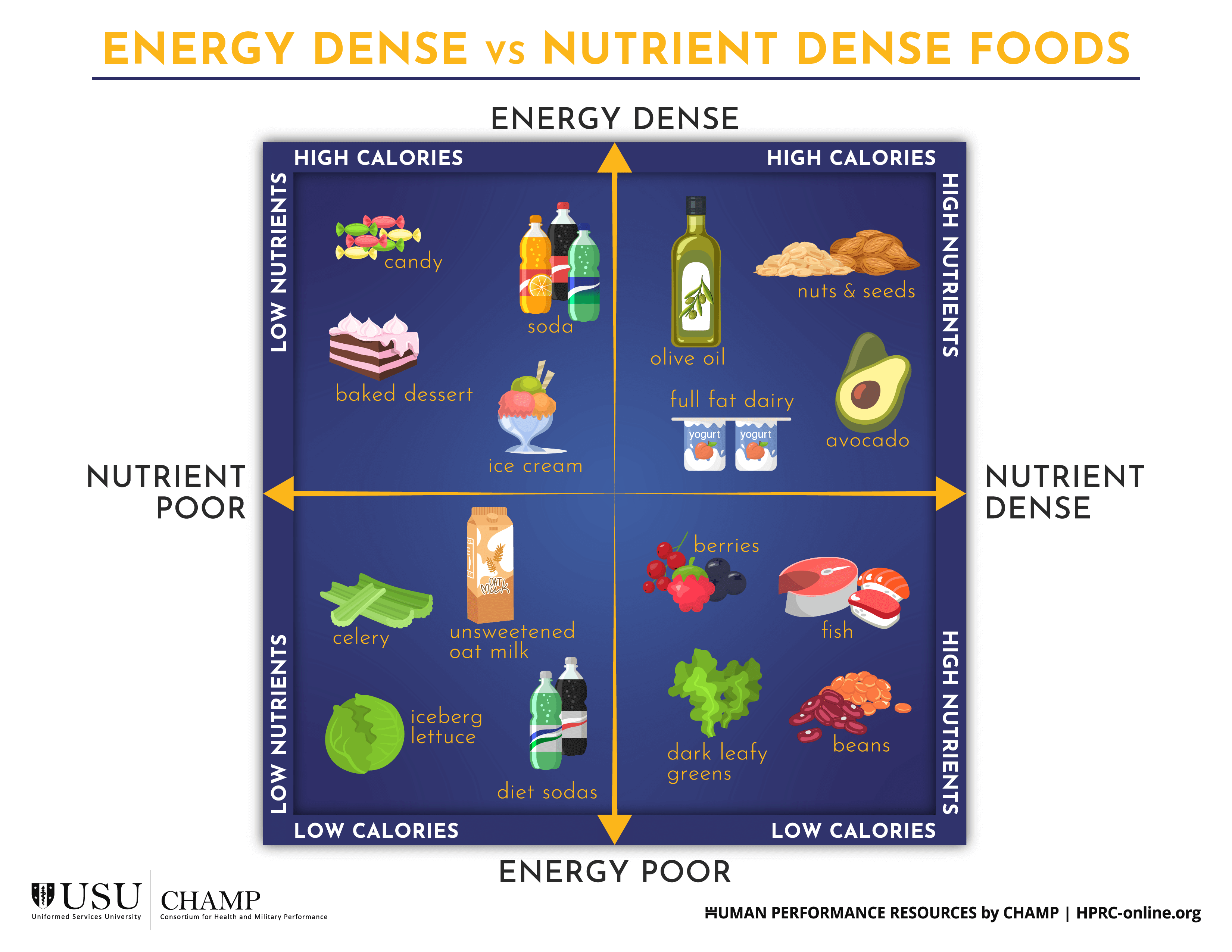
Energy-dense foods occupy the top half of the chart. Those in the top-left quadrant are low in nutrients — often called “empty calories” because they supply fuel (energy) but lack other health-promoting nutrients. In contrast, the top-right quadrant includes foods that are both energy-rich and nutrient-dense, effectively supporting high energy demands while nourishing the body with health-promoting compounds.
Similarly, nutrient-dense foods are found in the right-half of the chart. Whether they are high in calories (top-right quadrant) or low (bottom-right quadrant), selecting foods from this side ensures you receive essential vitamins, minerals, and fiber for optimal health and performance.
How do I choose what's right for me?
To optimize health and performance, prioritize nutrient-dense foods in your diet to meet your calorie needs (right-half of the chart). Nutrient-dense foods, which are often natural or minimally processed foods, tend to be high in health-promoting components essential for high performance and mission readiness. If foods are the vehicles and nutrients are the cargo, these cars are packed with all of the tools and equipment you need for success. Once you are choosing nutrient-dense foods, you can adjust the energy density based on your calorie needs, goals, and lifestyle.
Operational Considerations
Energy dense foods are critical tools for mission success. Service Members often face high physical demands in environments where traditional food services are unavailable. In these scenarios, the primary objective is to maintain fuel (energy) levels for mission safety and effectiveness.
Whether nutrient-dense options like nuts or seeds, or nutrient-poor options like commercial energy bars and candy, these foods serve a specific purpose: they are lightweight, shelf-stable, and provide immediate energy. During a mission, calorie quantity often takes priority over nutrient quality. Service Members need energy, first and foremost, and maintain performance and return home safe. Once the operation is complete, the focus can shift back to nutrient dense foods for recovery and long-term health.
Nutrition is contextual. Prioritize nutrient-dense foods as your foundational food choices, but remember that all foods can be part of your human performance toolkit.

