


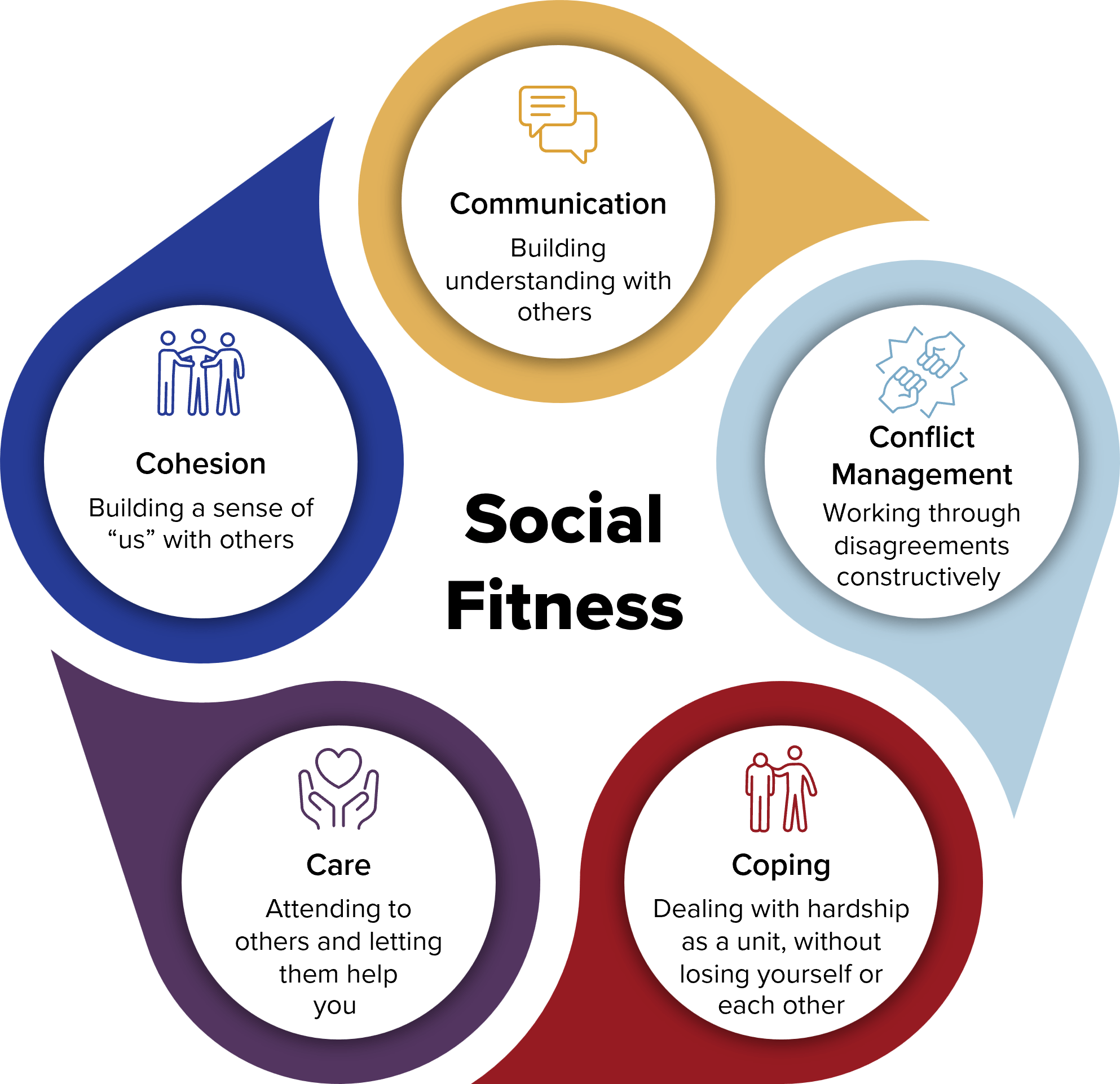
Social fitness is how well you assess, build, and optimize the relationships and interactions you have with others. That includes the people closest to you and everyone else you interact with. Well-developed social fitness transforms your relationships into a source of strength you can rely on throughout life.
Imagine your relationships as a convoy you are traveling in. The people in your convoy look out for you and encourage and support you through difficult times.
A strong convoy includes the people who show up when it matters most: fellow Service Members who watch your six, your partner or family members who stand by you through deployments, the friend who answers your call after a hard day, or the neighbor who steps in when you need an extra hand. These are the people who celebrate your successes, help you through setbacks, and make life’s challenges easier to manage.
Strong relationships require care and attention from everyone involved, and you cannot control how others act, but your social fitness starts with how you show up in your relationships.
The 5 Cs of Social Fitness
There are many positive interpersonal skills you can use to better relate to others, including these 5 fundamental ones:
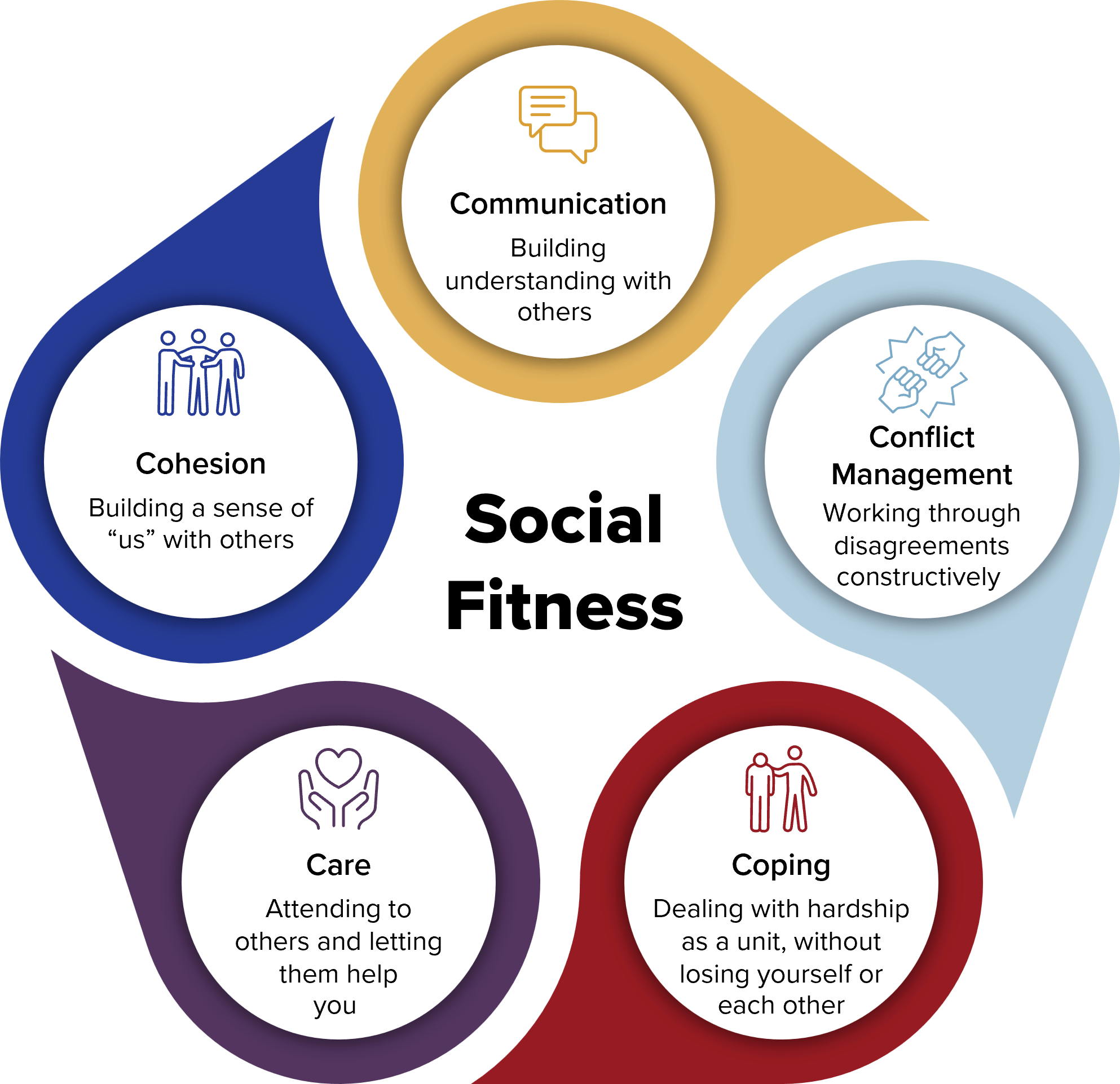
- Communication is about building understanding with others. It means sharing your thoughts, feelings, and needs clearly and honestly.
However, communication is not just about getting your point across. It’s also about listening with care, curiosity, and empathy with a genuine desire to understand the other person’s perspective. When both people feel heard and understood, it’s easier to find common ground. You can build trust, strengthen your connection, and support one another more effectively.
Even when your goal isn’t to strengthen a relationship, good communication helps you solve problems, resolve disagreements, set clear expectations, and get through tough conversations. Use the HPRC Communication Toolbox to learn practical communication skills for a variety of situations.
- Conflict management is about handling disagreements in healthy, productive ways. It can mean preventing conflict from escalating, addressing disagreements directly instead of avoiding them, and repairing relationships after there’s been a misunderstanding or painful confrontation.
Conflict often intensifies when someone feels unheard. Staying curious instead of judgmental, communicating with empathy to understand where the other person is coming from, and respecting that their perspective might differ from yours can change the course of a dispute and steer it toward something productive.
Although managing conflict isn’t always easy, using good communication and collaboration skills can help you turn it into an opportunity to learn, grow, and better understand one another. By working through conflict, you can strengthen trust, deepen your relationships, and find a constructive path forward, even when you can’t reach an agreement.
- Coping is about responding to life’s ups and downs in ways that help you adapt and keep moving forward. While coping may feel like something you do on your own, it often becomes something you do together—whether that’s with a partner, a family member, a friend group, or a teammate.
The way you respond to stress affects the people around you and vice versa. In military families, challenges like deployments, relocations, and dealing with uncertainty are shared, even when each person experiences them differently.
Shared coping means managing your own emotions while paying attention to the people alongside you. Even when you’re facing the same challenge, you might not need the same support or experience it the same way. Recognizing and respecting these differences helps you work through challenges as a team.
Supporting another person doesn’t necessarily mean carrying their load. Sometimes, you’ll only have the capacity to carry your own. Other times, you’ll be able to help someone else carry theirs. Part of building resilience together is knowing when you need support yourself, being honest about what you can and cannot take on, and recognizing when it’s time to ask for outside help. Coping as a unit means neither carrying everything alone nor losing sight of what others need from you.
- Care is about building a support system where you can lean on others and be there for them. The community of care you build can extend beyond your closest relationships to include teammates, coworkers, neighbors, and even strangers.
Care can take many forms, including helping with a task, giving advice, providing emotional support and encouragement, or simply being present. Whatever form care takes, building your social fitness means giving and receiving it. When you care for others and give others the opportunity to care for you, you build the trust and reciprocity that are the foundation of a strong relationship.
- Cohesion is about cultivating a sense of belonging and connection with others. It is a spirit of “we’re in this together” that moves you from thinking of yourself in “I” terms to “us.”
Cohesion is built through shared experiences and everyday acts that build trust. It might look like deepening intimacy with your partner, spending quality time with your family, building camaraderie with your team, or getting involved in your community.
Knowing you are a part of an “us” that celebrates wins and overcomes challenges together can strengthen your well-being and sense of self-worth.
Building Social Fitness Across Interactions and Relationships in Your Life
Throughout your life, you’ll form all kinds of connections, from the people closest to you to those you may know only briefly. Social fitness applies to all of them. The skills that help sustain a 20-year marriage are the same ones that can help you build trust with a teammate you met 3 days ago at a new duty station or get through a difficult conversation with a stranger.
But being socially fit doesn’t mean every relationship will last forever. Even with the best intentions, communication can break down, disagreements can escalate, and hardships can put distance between you and others. Social fitness gives you tools to work through many of these challenges, but it can’t fix everything. Some relationships naturally run their course. Others may need to end when trust, safety, or care is no longer present. Social fitness isn’t about holding onto every relationship or making every connection last.
Strong social fitness skills empower you to communicate your needs, support others, strengthen relationships that matter, mend what's broken, and know when to let a relationship go.
Building social fitness is a lifelong practice, and it gets easier over time. You’ll learn which relationships are worth investing in and how to spot co-builders—people who do the work with you, not just show up for the good times. You’ll learn what you need and how to ask for it. You’ll learn who will care for you the way you are willing to care for them. You’ll get better at moving through conflict productively.
The 5 Cs provide a simple, practical framework for building these skills and creating healthier, more supportive relationships throughout your life.
Bottom Line
Social fitness is about your ability to build strong relationships and create positive social interactions that support your well-being. Relationships are a two-way street, but you have the power to strengthen your own social fitness. You can do this by developing five key interpersonal skills: communicating effectively, managing conflict, coping with life’s challenges alongside others, giving and seeking support, and creating opportunities to connect and feel a sense of belonging. Use the additional resources below to put the 5 Cs of Social Fitness into practice across your relationships.
Additional Resources
Communication
Building understanding and connection
- Give praise that strengthens relationships
- Ask your partner questions that deepen connection
- Use storytelling to inspire and connect with others
Navigating difficult conversations
- Communicate effectively under stress
- Give and receive feedback effectively
- Communicate a major life decision with clarity, empathy, and understanding
- End a relationship with compassion and respect
- Manage tough questions about your service
Communicating to support and guide others
- Improve communication to strengthen team performance
- Use nonverbal communication to strengthen teamwork in combat conditions
- Help your children identify and express their feelings
- Build family resilience through flexible communication
Conflict Management
Preventing conflict from escalating
- Discuss hot-button topics with curiosity and respect
- Recognize and avoid common argument traps
- Use positive time-outs to de-escalate conflict
Working through disagreements
- Solve problems as a couple
- Communicate through conflict as a couple
- Fight the good fight
- Manage your anger and rebound from arguments
Repairing relationships
Moving forward when you can’t agree
Coping
Cope with military life changes together
- Cope with pain and illness together as a military couple
- Help your family build resilience after a brain injury
- Cope with frequent separations
- Coping for military caregivers
- Coping with the transition to parenthood
- Coping with infertility
- Coping with a break up
Support resilience in others
Care
Ask for support when you need it
Support others
- Help your family recover after a combat injury
- Help your military kids build friendships
- Support your uniformed partner when you're not in uniform
- Help your children navigate difficult situations
- Support your aging parents
- Help your partner lose weight
- Support your Warfighter through the transition back to school
Cohesion
Build trust
- Build healthy relationship habits
- Build trust in your relationships
- Build trust to strengthen team performance
Create a sense of belonging
Strengthen your connections

