



When weight loss is your main fitness goal, resistance training is a critical piece of your physical fitness plan. Resistance training not only helps you reach peak physical readiness as a Service Member, but it also helps you achieve and maintain your weight loss goal while supporting overall health.
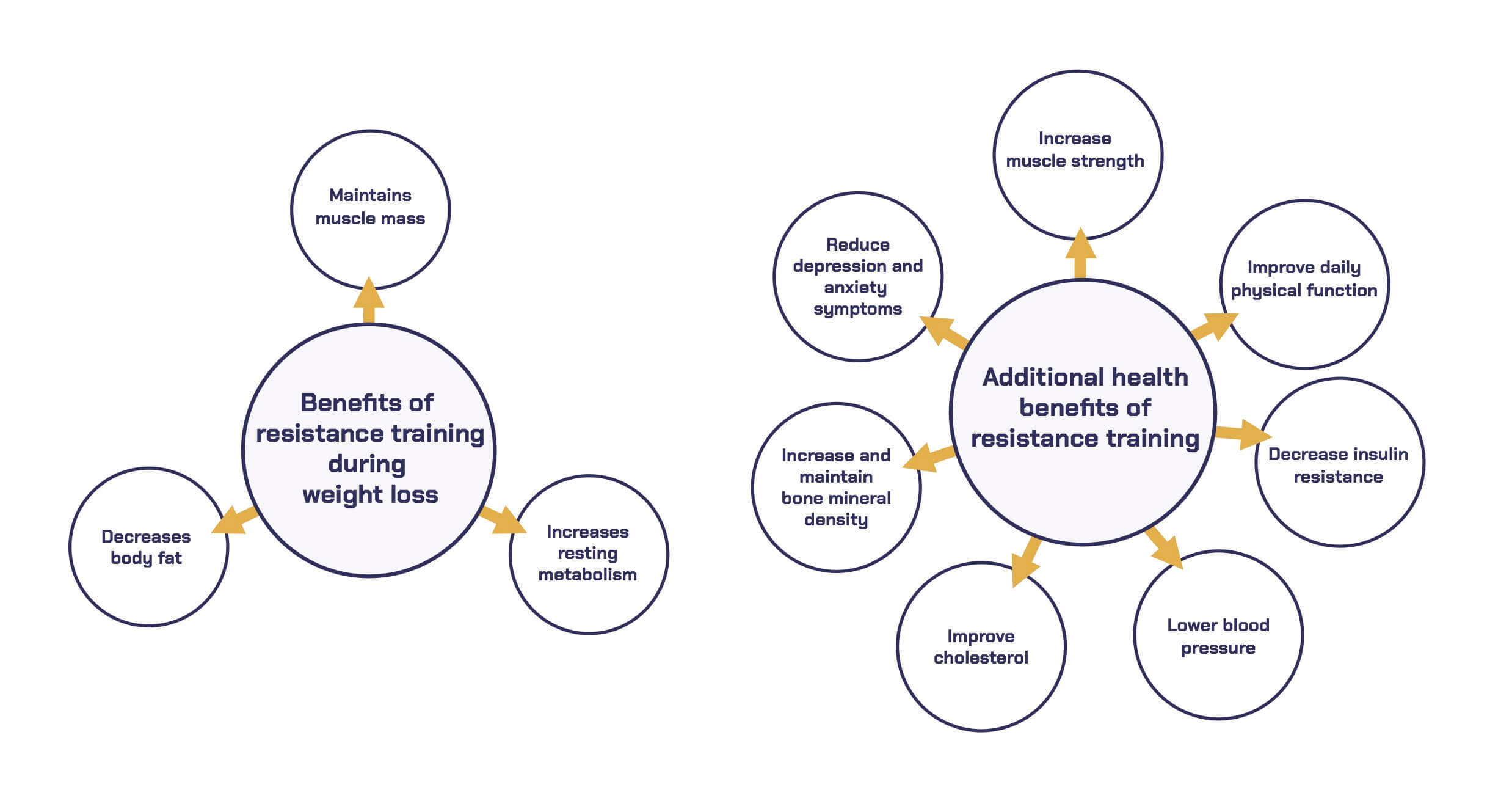
Creating a caloric deficit is one strategy used as part of a holistic weight loss plan. However, it’s important to understand that when you’re in a caloric deficit, you might lose both fat mass and muscle mass. Losing too much muscle mass can lead to decreased resting metabolism, reduced physical ability in daily activities, increased injury risk, and make for an overall more challenging weight-loss journey. Conducting consistent and proper resistance training during a period of caloric deficit is key to minimizing muscle loss and creating sustainable weight loss outcomes.
Resistance training supports a holistic weight-loss plan by increasing resting metabolism, or the number of calories your body burns while at rest. After a resistance training session, your resting metabolism can be higher for up to 180 minutes because your body requires more energy to recover. The amount your metabolism increases during this short period varies based on the overall volume and intensity of your workout. Over time, consistent resistance training can increase muscle mass. This additional muscle requires energy for maintenance, which leads to an increase in long-term resting metabolism. Improvements in both short-term and long-term resting metabolism can lead to a reduction in body fat.
Resistance training also has many additional health benefits that can improve your quality of life. In addition to strength gains, resistance training decreases insulin resistance, which helps control your blood sugar and is especially important for people with type 2 diabetes. Consistent resistance training also lowers blood pressure, improves cholesterol, and increases bone mineral density. Resistance training also decreases symptoms of anxiety and depression.
Benefits of resistance training when taking obesity management medications
Obesity management medications can be prescribed as a treatment option for some qualifying people to help manage the disease. These medications might lead to larger or more rapid decreases in weight, which increases the likelihood of losing too much muscle mass. If you’re taking obesity management medications, make sure to include resistance training and follow these nutrition practices in your holistic weight loss plan . This will help you achieve your goals while benefiting your overall health and physical performance.
Guidelines for getting started with resistance training
In order to realize these benefits, start by resistance training two days per week, targeting all major muscle groups: arms, shoulders, chest, back, abdomen, legs, and hips. Do at least one set of 8–12 repetitions from each of the foundational movements. The resistance training handout below provides exercise examples for each of these movement categories. The key is to start off slowly and to stay consistent. After a few weeks of consistent workouts, you can use the resistance training pyramid to learn how to plan and progress your workouts further. As your physical fitness improves, increase the volume or intensity of your workouts over time to avoid slowing progress or hitting a plateau.
Additional resources
A holistic approach can help you reach your goals and sustain them. Check out HPRC’s “Get into Fighting Weight: A Total Force Fitness Guide” for additional strategies.

